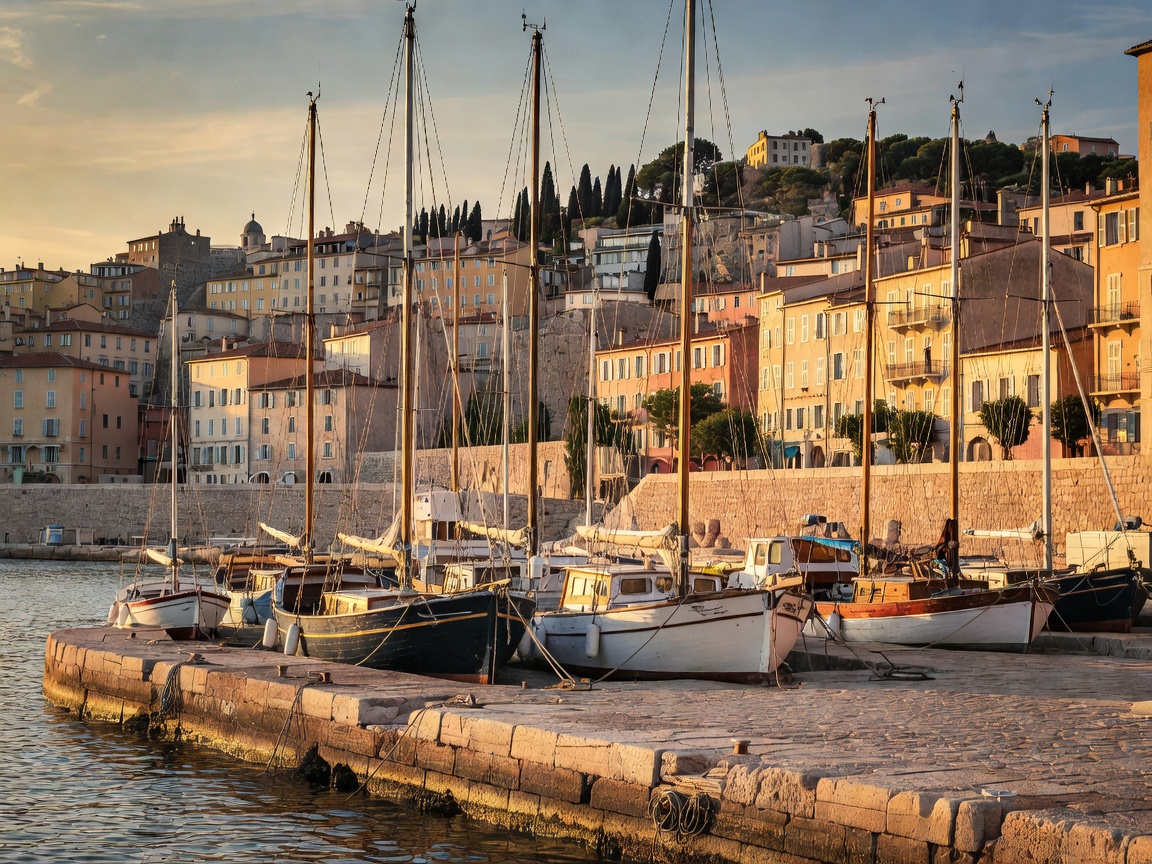
Marseille is not a boutique yachting town. It is a large, busy, sometimes chaotic port city with a sailing culture that runs from school dinghies at Pointe Rouge to cruising yachts tucked into the Vieux-Port. For budget buyers that matters: a big local fleet of practical boats means a steady supply of older, well-used craft changing hands between people who actually sail them.
Where the boats are
Listings in the Marseille area tend to cluster around a handful of harbours, each with its own character and its own kind of seller.
| Harbour | Setting | What it suits |
|---|---|---|
| Vieux-Port | Historic city-centre basin, busy with clubs, ferries and visitors | Viewing many boats in one walk; owners who value being in town |
| Pointe Rouge | Southern district near the Calanques, strong sailing-school scene | Day-sailing and coastal cruising towards the Calanques national park |
| L'Estaque | Northern harbour with a more working atmosphere and nearby yards | Project boats and practical access to hard standing |
| Frioul | Island harbour a short ferry ride offshore | Sheltered weekend use; viewings need planning around crossings |
What sits at the accessible end of the market
The lower-priced end of Marseille listings is dominated by small cruising yachts, broadly from around six to nine metres, many built by French yards in the 1970s, 1980s and 1990s. You will regularly see older Bénéteau First and Jeanneau models, the long-running Dufour Arpège design and Gib'Sea cruisers. These boats were produced in numbers for exactly this coastline, so spares, owner knowledge and second opinions are easy to find.
You will also encounter traditional pointus, the round-sterned wooden boats associated with Provence. They are charming and often inexpensive to acquire, but wooden hulls ask for regular, skilled maintenance, and they are usually motor or small-sail day boats rather than cruisers.
Prices move with condition, engine age, sail inventory and — crucially in Marseille — whether any mooring arrangement exists. We do not publish price figures because asking prices change quickly and vary widely between sellers; compare several current listings of the same model instead.
The Mistral factor
Marseille's defining weather feature is the Mistral, a strong, dry north-westerly that can blow for days. Boats kept here work hard, even at the berth. When inspecting, look closely at:
- Standing rigging, terminals and chainplates for corrosion or hairline cracks.
- Sail cloth and UV strips — Mediterranean sun degrades fabric faster than many buyers expect.
- Mooring lines, cleats and fairleads, which take constant snatch loads in crowded basins.
- Deck hardware bedding, because flexing under load lets water into the deck core.
The berth question
The biggest hidden cost in Marseille is not the boat but where to keep it. In many French public ports, annual berths are allocated by the port authority to a named owner rather than to the boat, so a seller cannot always pass a berth on with a sale. Always ask the harbour office directly, and treat any listing that promises a transferable berth with caution until it is confirmed in writing.
Alternatives include seasonal visitor berths, dry storage on a boatyard's hard standing with launching when needed, or a trailer-sailer kept at home.
Pros and cons
Pros
- Large supply of small French-built cruisers.
- Strong community of sailors, surveyors and yards.
- Superb cruising on the doorstep: Calanques, Frioul, Côte Bleue.
- No meaningful tide, which simplifies mooring and access.
Cons
- Annual berths are scarce and often have waiting lists.
- Wind and sun accelerate wear on rigs, sails and deck gear.
- Busy basins mean more cosmetic knocks and fender damage.
- Long periods afloat can hide hull issues until a haul-out.
A practical viewing plan
- Shortlist boats in two or three harbours and view them on the same day to compare like with like.
- Ask for registration papers and the owner's maintenance history before you travel.
- Run the engine from cold and watch for smoke, overheating and weak cooling-water flow.
- Commission an independent marine surveyor and budget for a lift-out.
- Confirm with the harbour office exactly what happens to the mooring after the sale.