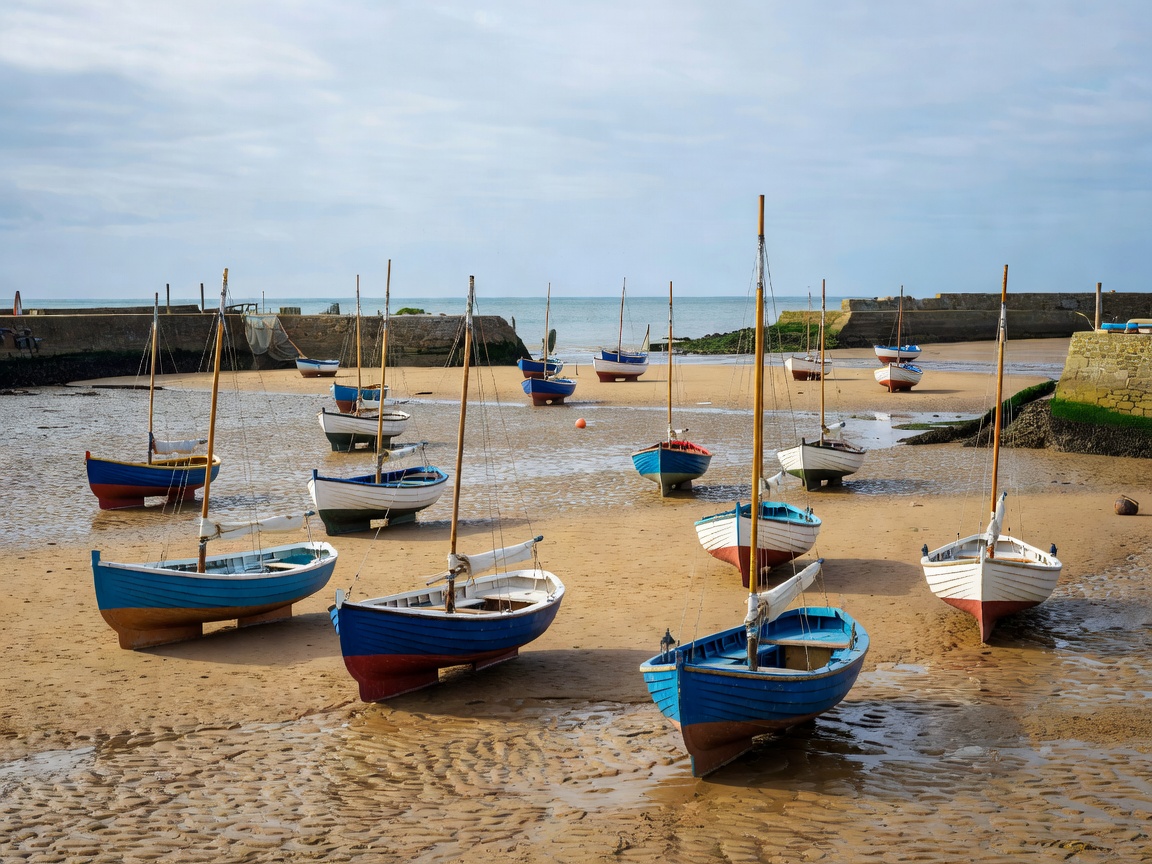
Few regions are as bound up with sailing as Brittany. From Saint-Malo on the north coast to Brest, Concarneau, Lorient and La Trinité-sur-Mer in the south, harbours are packed with boats, schools and yards. Lorient's La Base has become a centre for offshore racing teams, and Brittany is home to builders such as Pogo Structures in Combrit. The Glénan archipelago and the Gulf of Morbihan are rites of passage for French sailors.
A market shaped by tough water
Brittany's waters are not gentle. The north coast has some of the largest tidal ranges in Europe, and passages such as the Chenal du Four and the Raz de Sein demand careful timing. Boats that live here tend to be chosen and equipped for these conditions: robust hulls, good ground tackle, reefing systems that actually work, and often lifting or twin keels for drying harbours.
For a buyer, this can be excellent news. Many boats have been maintained by owners who know their safety depends on it. The flip side is that some boats have been sailed very hard, and salt, damp and repeated drying out take their toll.
What turns up at the accessible end
Expect a wide range of older polyester cruisers from French yards, small twin-keelers suited to drying moorings, and a notable number of traditional wooden boats. Aluminium lifting-keel cruisers, such as the Ovni range from Alubat, are well known in the region, though they tend to hold their value and rarely sit at the budget end.
| Category | Why it appeals | What to check |
|---|---|---|
| Older GRP cruiser | Plentiful, simple, easy to maintain | Osmosis, deck-core moisture, rudder bearings |
| Twin-keel coastal boat | Dries upright on tidal moorings | Keel bolts, stub joints, grounding damage |
| Traditional wooden boat | Character, heritage, sometimes low entry cost | Rot, fastenings, ongoing yard costs |
| Aluminium lifting-keel cruiser | Very shallow draught, strong hull | Galvanic corrosion, paint system, keel mechanism |
Wooden boats: tempting but demanding
Brittany's maritime heritage keeps many traditional boats afloat, and events such as the maritime festivals in Brest and Douarnenez celebrate them. A wooden boat can look like the bargain of the decade. In reality, the purchase price is only the entry ticket: planking, fastenings, caulking and paint need regular skilled attention. Always have a wooden hull surveyed by someone who specialises in traditional construction.
Mooring on a tidal coast
Many Breton owners keep boats on swinging moorings or in drying harbours rather than in marinas. These options can be more affordable, though allocation rules vary by commune and port. If a listing mentions a mooring, ask the harbour master how moorings are allocated and whether any transfer is possible after a sale.
Pros and cons
Pros
- Very large, knowledgeable sailing community.
- Boats often well equipped for demanding conditions.
- More affordable mooring options on tidal coasts.
- Rich choice of shallow-draught designs.
Cons
- Some boats carry hard offshore miles.
- Damp climate encourages mould and electrical corrosion.
- Big tides and strong currents require experience.
- Wooden bargains can hide expensive structural work.
Inspection checklist for Breton boats
- Check the keels and hull-to-keel joints for signs of grounding or cracking.
- Test the reefing system; on a demanding coast it must work quickly.
- Inspect the anchor, chain and windlass — ground tackle matters here.
- Look behind panels for condensation damage and corroded wiring.
- Ask for records of rigging and sail replacement, and of any repairs after groundings.
North coast or south coast?
The north coast, around Saint-Malo and the Côtes-d'Armor, offers dramatic scenery but big tides and strong streams. The south coast, from Bénodet to the Gulf of Morbihan, is generally gentler, with islands and sheltered bays that suit newer skippers. Where you plan to sail should influence where you buy — and which keel configuration makes sense.